
Introduction
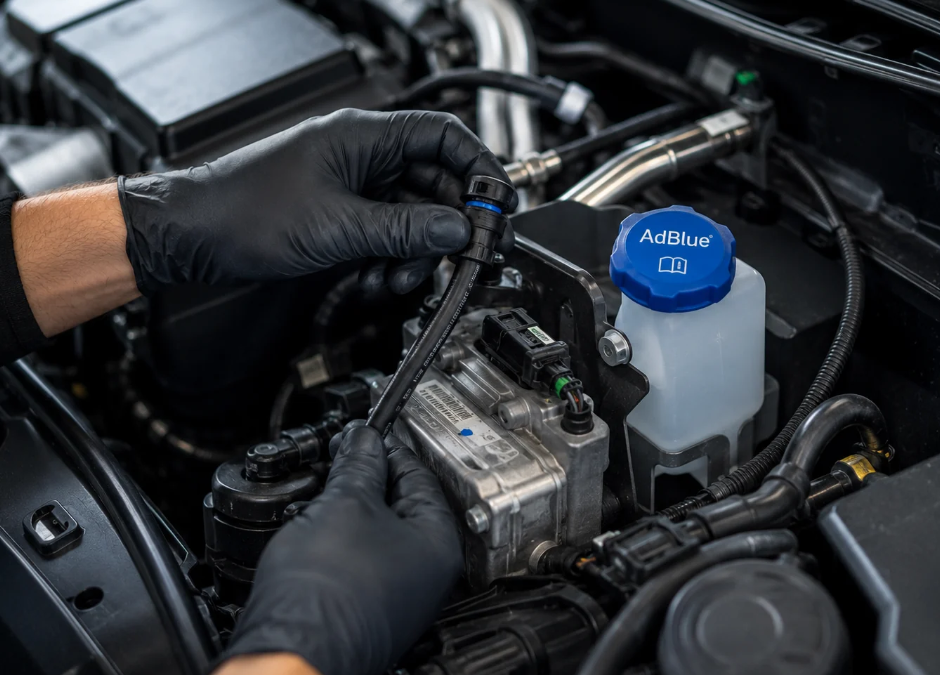
Modern diesel vehicles are equipped with advanced emission control systems designed to reduce harmful exhaust gases and meet environmental regulations. One important component of this technology is the AdBlue system, which works alongside Selective Catalytic Reduction (SCR) technology to reduce nitrogen oxide (NOx) emissions. However, like any other vehicle component, the AdBlue system can develop technical issues that trigger warning lights on the dashboard.
Seeing an AdBlue warning light can be frustrating, especially when your vehicle appears to be running normally. Sometimes, the warning indicates a low fluid level, while in other situations, it may point towards a faulty sensor, pump malfunction, blocked injector, or SCR system problem. Understanding these warnings can help drivers recognise potential issues early and avoid unnecessary repair expenses.
What Does the AdBlue Warning Light Mean?
The AdBlue warning light indicates that your vehicle’s emission control system requires attention. In most diesel vehicles, this warning appears when the AdBlue fluid level becomes low or when the system detects an operational fault.
If the warning is caused by a low fluid level, refilling the tank with the correct AdBlue solution may resolve the issue. However, if the warning remains illuminated after refilling, there could be an underlying technical problem that requires professional diagnosis.
Some vehicles also display a countdown warning indicating that the engine may not restart after a specified distance if the issue remains unresolved. This feature is designed to encourage drivers to address emissions-related problems promptly.
Common Causes of AdBlue System Problems
Several factors can affect the proper functioning of an AdBlue system. One common cause is the use of contaminated or unsuitable fluid, which can interfere with the system’s operation. AdBlue should always meet the ISO 22241 standard to ensure compatibility and reliable performance.
Another frequent issue involves faulty NOx sensors. These sensors monitor nitrogen oxide levels in the exhaust system and communicate information to the vehicle’s engine management system. If a sensor provides inaccurate readings, it can trigger an emissions warning even when other components are functioning correctly.
Pump-related problems can also affect AdBlue delivery. The pump transfers fluid from the storage tank to the injector at the required pressure. If it fails to operate correctly, the SCR system may not receive the necessary fluid.
Additionally, AdBlue can crystallise around the injector over time, creating deposits that restrict fluid flow. These blockages can prevent the system from working efficiently and may cause persistent dashboard warnings.
Understanding Common Diagnostic Trouble Codes
When an AdBlue warning appears, professional diagnostic equipment can help identify stored Diagnostic Trouble Codes (DTCs). These codes provide useful information about the system and help technicians investigate the source of the problem.
For example, code P20EE generally relates to SCR catalyst efficiency, while P204F indicates a reductant system performance issue. Code P20E8 is associated with low reductant pressure, whereas P203B relates to the reductant level sensor circuit. These codes help narrow down potential problems, but further testing is often necessary to confirm the actual cause.
It is important to understand that a diagnostic code does not always mean a particular component has completely failed. Electrical connections, wiring problems, software issues, and other related components may also contribute to the warning.
How Can AdBlue Problems Be Diagnosed?
Accurate diagnosis begins with a complete vehicle scan using suitable professional diagnostic equipment. A qualified technician can examine stored fault codes, review live sensor readings, inspect electrical connections, check fluid quality, and test pump operation where necessary.
Understanding the information behind adblue fault codes helps technicians identify the underlying issue rather than simply replacing components based on dashboard warnings.
A proper diagnostic process can save time, prevent unnecessary expenses, and help ensure that the correct repair is carried out.
Why Should You Address AdBlue Warnings Early?
Ignoring an AdBlue warning can lead to more complicated vehicle problems. Depending on the vehicle model and the nature of the fault, the engine management system may activate a reduced-performance mode or a no-restart countdown.
Early attention can help maintain vehicle reliability, protect important emission control components, and reduce the possibility of unexpected breakdowns. It also ensures that the vehicle’s emissions system continues to operate as intended.
Conclusion
An illuminated AdBlue warning light should never be ignored. Whether the cause is a low fluid level, faulty sensor, pump malfunction, injector blockage, or SCR system issue, identifying the underlying problem is essential for finding the right solution.
For professional guidance and vehicle diagnostics, MPG Tuning Ltd in Cannock can help drivers understand AdBlue-related concerns and explore suitable, emissions-compliant repair options. Taking action at the right time can improve vehicle reliability, reduce unnecessary repair costs, and provide greater confidence on the road.