
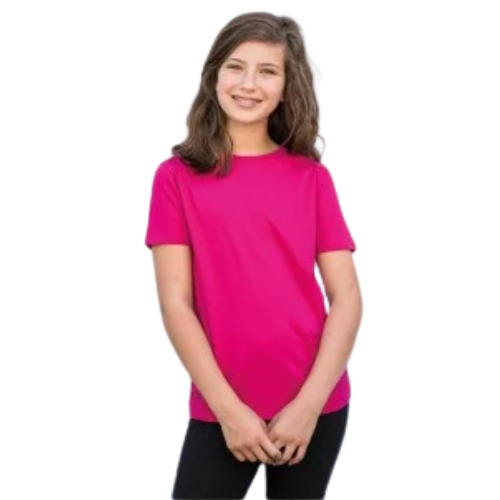
Managing children’s clothing inventory requires careful planning because children’s sizes vary significantly across age groups, and demand can differ between styles, colours, and seasons. Retailers and wholesale buyers need a reliable kids t-shirt size range that meets customer expectations without leaving them with excessive unsold stock.
A well-planned sizing strategy helps businesses balance product availability, customer satisfaction, and inventory costs. Instead of ordering equal quantities in every size, buyers can use sales data, customer feedback, and flexible purchasing decisions to build a range that reflects actual demand.
Understand the Differences Between Children’s Sizes
Children grow at different rates, so age-based sizing alone may not always provide an accurate fit. Two children of the same age can have different heights, body proportions, and clothing preferences. This makes it important to consider garment measurements alongside age recommendations.
Retailers should review chest width, body length, sleeve length, and shoulder measurements when evaluating a size range. These details help identify whether a garment offers a comfortable fit for different body types.
Clear size charts also make online shopping easier. When parents can compare garment measurements with clothing their children already wear, they can make more informed purchasing decisions and reduce unnecessary returns.
Analyse Sales Data Before Selecting Size Quantities
One of the most effective ways to control inventory is to study previous sales rather than relying on assumptions. Retailers should identify which sizes sell quickly, which remain in stock, and which experience seasonal demand.
For example, a retailer selling a Kids T-Shirts Collection should compare sales across individual sizes, colours, and designs before placing a repeat order. If certain sizes consistently sell out while others remain unsold, the next purchase can be adjusted accordingly.
Useful data includes:
- Sales volume by size and colour
- Sell-through rates for individual products
- Customer returns linked to sizing issues
- Seasonal purchasing patterns
- Stock levels and replenishment times
These insights allow businesses to make smaller, more accurate purchasing decisions and avoid investing too heavily in slow-moving sizes.
Build a Balanced Size Curve Instead of Ordering Equal Quantities
Ordering identical quantities of every size may appear convenient, but it can create inventory imbalances. Actual demand rarely follows a perfectly equal distribution, particularly when retailers serve customers with different age groups and purchasing habits.
A size curve is a planned distribution of stock across available sizes. Businesses can develop this distribution using historical sales, customer demographics, and expected demand.
For example, a retailer might discover that medium and large children’s sizes account for a greater share of sales than the smallest size. The next order can then reflect that pattern instead of distributing stock equally.
However, buyers should avoid copying another retailer’s size curve without checking whether their customer base is comparable. A business serving younger children may require a different stock distribution from one targeting older children.
Choose Versatile Colours and Practical Designs
Colour selection also affects inventory performance. Ordering too many colours can divide demand across several variations, leaving individual products with insufficient sales to justify the stock investment.
Retailers can reduce this risk by prioritising versatile colours, including white, black, navy, and grey, before expanding into seasonal shades or trend-led designs. These colours can appeal to a broader audience and support repeat purchases.
Simple designs can also be easier to replenish and coordinate with other clothing items. Once sales data confirms demand, retailers can introduce additional colours or prints in controlled quantities.
The objective is not to eliminate product variety but to introduce it gradually, using customer demand to guide purchasing decisions.
Work With Suppliers That Support Flexible Ordering
Supplier flexibility is essential when managing children’s clothing inventory. Minimum order quantities, lead times, and replenishment options can directly affect how much stock a retailer needs to hold.
Businesses should discuss available size combinations, repeat-order schedules, colour availability, and delivery timelines before committing to large purchases. Where possible, smaller initial orders allow retailers to test demand before increasing quantities.
Retailers sourcing from plain t shirts uk suppliers should also compare garment specifications, fabric quality, sizing consistency, and reorder availability. Reliable product information helps businesses maintain a consistent customer experience across repeat purchases.
For wholesale buyers, the lowest unit price is not always the most economical choice. A slightly higher purchase cost may be worthwhile if it reduces excess inventory, improves product consistency, or allows more flexible replenishment.
Use Customer Feedback to Improve Size Accuracy
Customer feedback can reveal problems that sales figures alone cannot explain. Parents may report that a garment feels too narrow, the sleeves are too short, or the body length differs from expectations.
Retailers should record recurring comments and compare them with the manufacturer’s measurements. This helps distinguish between genuine sizing problems and differences in individual fit preferences.
Product pages should provide accurate measurements, fabric composition, and relevant fit information. If a garment has a relaxed or slim fit, explaining this clearly helps customers select the right size.
Monitoring return reasons is equally important. A high return rate caused by inconsistent sizing may indicate a product specification issue rather than a problem with demand.
Review Inventory Performance Regularly
Inventory planning should be an ongoing process rather than a decision made only when placing an order. Regular reviews help retailers identify slow-moving stock, adjust future purchases, and respond to changes in customer preferences.
A simple monthly review can track sales by size, remaining stock, sell-through rates, and the time required to replenish popular products. Businesses can then decide whether to reorder, reduce future quantities, or discontinue underperforming variations.
Seasonal planning is particularly important for children’s clothing because growth patterns, school requirements, and changing weather can influence buying behaviour. Ordering too late may cause missed sales, while ordering too early in excessive quantities can increase storage costs.
Conclusion
Building a reliable children’s T-shirt size range requires a combination of accurate garment measurements, demand forecasting, flexible supplier relationships, and regular inventory analysis. Retailers that understand their customers’ sizing needs can maintain better product availability without tying up unnecessary capital in unsold stock.
By using sales data to guide size distribution, introducing product variations gradually, and monitoring customer feedback, businesses can create a more efficient inventory strategy that supports sustainable growth and a better shopping experience.