
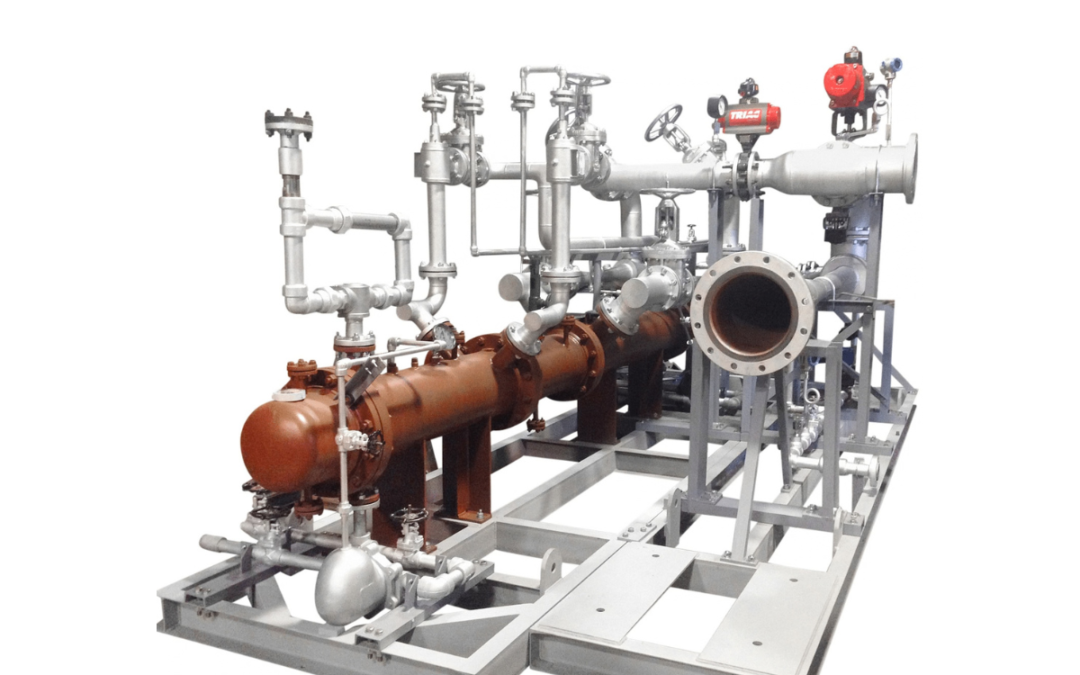
Vacuum technology plays an important role in many industrial processes where controlling pressure is essential for efficient and reliable operation. From chemical processing and petroleum refining to power generation and food processing, industrial facilities often require vacuum conditions for evaporation, distillation, condensation, drying, and other process operations.
Among the technologies used to create and maintain vacuum, steam ejector systems are particularly valuable in applications where reliability, durability, and the ability to operate under demanding conditions are important. A steam jet ejector vacuum system uses high-pressure steam to create a vacuum without relying on conventional mechanical moving parts. This design makes the technology suitable for a wide range of industrial environments.
What Is a Steam Jet Ejector Vacuum System?
A steam jet ejector vacuum system uses the energy of motive steam to produce vacuum. High-pressure steam enters an ejector nozzle and is accelerated to a high velocity. As the steam moves through the ejector, it creates a low-pressure region that draws process gases or vapors into the system.
The steam and entrained gases then pass through the ejector’s diffuser section, where part of the velocity is converted into pressure. Depending on the required vacuum level and operating conditions, multiple ejector stages may be combined to achieve deeper vacuum conditions.
Unlike many mechanical vacuum pumps, ejectors have no rotating shafts, bearings, or other moving components within the primary ejector itself. This relatively simple construction can be beneficial in industrial applications where equipment must operate continuously.
How Steam Ejector Vacuum Systems Work
The basic operating principle behind a steam ejector vacuum system involves the conversion of pressure energy into velocity and then back into pressure.
Motive steam enters through a nozzle and expands as it passes through the opening. This expansion produces a high-velocity steam jet and creates a low-pressure area around the nozzle. Process vapors or non-condensable gases are pulled into this area and become entrained in the steam flow.
The combined stream then enters a diffuser. As the flow slows down, its velocity decreases and pressure increases. Additional stages may be incorporated when the application requires a deeper vacuum.
The number of stages and the configuration of the system depend on factors such as suction pressure, discharge pressure, motive steam conditions, load requirements, and the characteristics of the process gases.
Why Are Steam Jet Ejectors Used in Industry?
One of the main advantages of steam jet ejectors is their relatively simple construction. Because the ejector itself does not depend on rotating mechanical components, there are fewer moving parts that can wear during operation.
This can make ejector technology useful in industrial environments where equipment reliability is important. Steam ejectors can also handle mixtures containing vapors and gases that may be difficult for some mechanical vacuum equipment to process.
Another advantage is their ability to operate across different vacuum ranges when appropriately designed. Multi-stage arrangements can be used for applications requiring deeper vacuum levels, while single-stage ejectors may be sufficient for less demanding conditions.
Applications in Industrial Processing
Steam ejector vacuum systems are used across a variety of industries. In petroleum refining, vacuum conditions can help facilitate the processing of materials at lower temperatures. This is particularly important in vacuum distillation applications, where reducing pressure can lower boiling temperatures.
Chemical processing facilities may use ejector systems for evaporation, drying, distillation, and vapor handling. In power generation, vacuum systems can be associated with condenser applications and other processes where maintaining appropriate pressure conditions is necessary.
Steam ejectors can also be used in food and edible oil processing, where vacuum conditions may support processes such as evaporation and deodorization. Their broad applicability makes them an important technology for industries that require dependable vacuum generation.
Factors to Consider When Selecting an Ejector System
Choosing an ejector system requires a detailed understanding of the process. The required suction pressure is one of the most important factors because it determines the type and configuration of equipment needed.
Motive steam pressure and temperature also affect ejector performance. Engineers need to understand the available steam conditions and ensure that they are compatible with the required operating parameters.
The composition and quantity of the gases or vapors being handled are also important. Different process loads can influence ejector sizing and staging requirements.
Discharge pressure must also be considered. If the ejector must discharge into a condenser or another piece of process equipment, the downstream pressure can directly affect system performance.
Single-Stage and Multi-Stage Systems
Not every industrial application requires the same ejector configuration. Single-stage ejectors can be appropriate for applications with less demanding vacuum requirements. When a deeper vacuum is required, multiple ejector stages may be arranged in sequence.
In a multi-stage system, each stage performs part of the pressure reduction process. Intercondensers may also be incorporated between stages to remove condensable vapors and reduce the load on subsequent ejectors.
This approach can improve the overall performance of the vacuum system while allowing engineers to design the system around specific process requirements.
Maintaining Reliable Vacuum Performance
Although ejectors have relatively simple mechanical construction, the overall vacuum system still requires appropriate operation and maintenance. Steam quality, condenser performance, cooling-water conditions, and process loads can all influence system performance.
Changes in motive steam pressure or temperature may affect the vacuum level achieved. Similarly, fouling in condensers can reduce heat-transfer performance and increase operating pressure.
Regular monitoring can help operators identify changes in suction pressure, discharge pressure, steam consumption, or condenser performance. Addressing these issues early can help maintain consistent vacuum conditions and reduce unexpected process interruptions.
Conclusion
Steam ejector technology continues to provide a practical approach to vacuum generation across demanding industrial applications. By using motive steam to entrain process gases and vapors, these systems can support processes such as refining, chemical processing, evaporation, distillation, and power generation. Proper system design requires careful consideration of vacuum requirements, steam conditions, process loads, discharge pressure, and condenser performance. Croll Reynolds develops engineered vacuum and ejector solutions designed around the specific requirements of industrial processes, helping facilities address challenging vacuum applications with appropriately configured systems.